



Sara Lupolt, PhD
Career Development trainee
Advances exposure assessment methods to address complex environmental health and food system challenges, with a focus on translating research into healthier communities.
Training
Financial support, mentoring, and training for a highly selective group of junior faculty.
The CHARMED Center plays a key role in enhancing the careers of new investigators and supporting the career advancement and professional development of environmental health scientists with an interest in community-engaged research.
The Career Development Program provides financial support, mentoring, and training for a highly selective group of junior faculty members whose current research interests complement the Center's theme of community-engaged research. The goal is to foster their development as independent investigators in environmental health science, while furthering the overall mission of the Center and the NIEHS.
To attract promising young investigators whose expertise complements that of current Center members and whose research is centered on community-engaged research, we provide 20% salary support and pilot research grant support for one junior faculty member each year.
Candidates are solicited from department chairs, division heads, and other leaders, who are asked to submit one to three names of possible candidates along with brief biographical sketches and descriptions of their anticipated career trajectories. The Executive Committee selects the candidates for support.
Each junior faculty member chosen to receive Center support is guided by the Center Director, Dr. Marsha Wills-Karp. The Executive Committee also meets with awardees regularly to monitor research progress, assess career development, and offer advice as needed.
Awardees are taught about the various K-awards available across the NIH as well as R01 grant mechanisms, and the Career Development team provides grant proposal writing advice and review.
Awardees attend the Center's Thematic Research Group meetings and the Departmental Grand Rounds series featuring external experts in environmental health and engineering. Each awardee submits a pilot project proposal and conducts a community-engaged research project.
Awardees are encouraged to use the Exposure Characterization and Modeling Core, which offers an opportunity to learn skills in the collection and management of environmental samples and state-of-the-art exposure assessment for metals and airborne pollutants, and the Integrated Health Sciences Facility Core, which covers collection of questionnaire data and biological samples as well as IRB submission. Awardees also participate in CEC workshops on best practices in community-engaged research, monthly community meetings, and the Summer Youth Environmental Justice Scholars program.
Trainees
Career Development trainee
Advances exposure assessment methods to address complex environmental health and food system challenges, with a focus on translating research into healthier communities.

Career Development trainee
Combines public health and sanitary engineering to understand environmental pathogen exposures and develop solutions that protect community health.

Career Development trainee
Advances instrumentation to investigate the sources and chemistry of gas- and particle-phase pollutants and their impacts on air quality and communities.
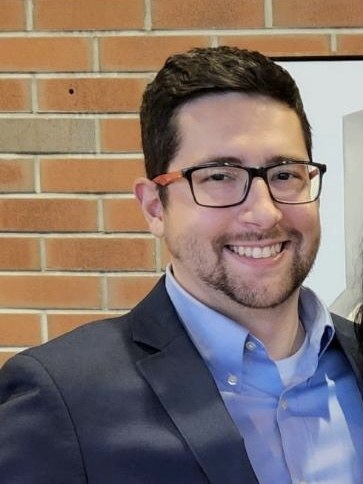
Career Development trainee
Advances our understanding of the connection between health and place through spatial epidemiology and medical geography.
Related
Early-stage investigators can also apply directly for a Career Development Award of up to $40,000.