



Facility Core · CEC
Community Engagement Core
Building authentic, lasting partnerships between communities across the region and the environmental health researchers who can help answer their questions.
The Community Engagement Core is the Center's front door for residents, community organizations, and environmental health stakeholders. The CEC runs workshops and training on authentic community engagement, hosts sessions at regional symposia, and maintains practical environmental health resources for the public.
The core also convenes the Environmental Health Stakeholders Board (EHSB), which brings community-based organizations, regulatory agencies, and regional partners into the Center's decision-making.
Leadership
CEC leadership




In the community
Measurements and events
CEC partners and researchers measuring air quality together and meeting with neighbors across the region.
Community partners
Organizations we work with



Environmental health resource
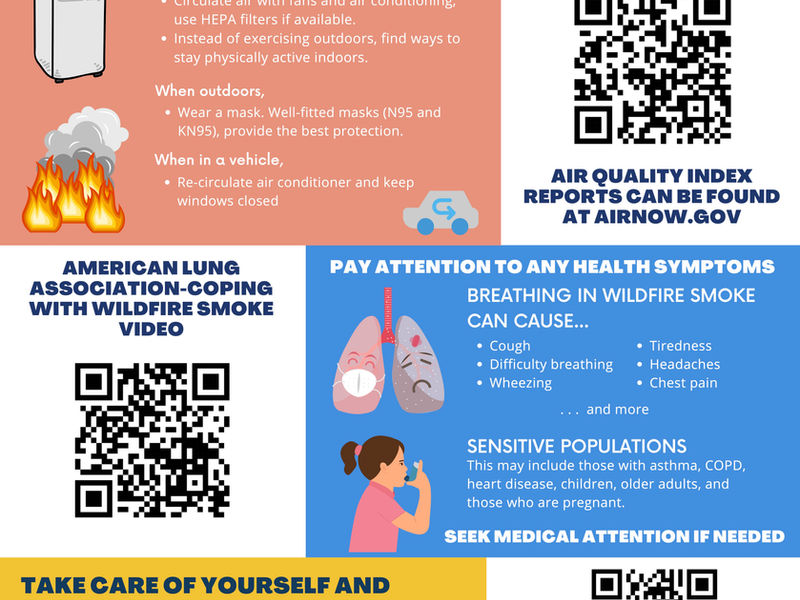
Protecting yourself from wildfire air pollution
Wildfire smoke can travel hundreds of miles and sharply degrade air quality in the Maryland region. Here's what to do when it does.
Minimize smoke exposure
- Stay indoors with windows closed where possible.
- Circulate air with fans and air conditioning; use HEPA filters if available.
- Instead of exercising outdoors, find ways to stay physically active indoors.
- When outdoors, wear a well-fitted mask — N95 and KN95 masks provide the best protection.
Monitor air quality daily
- Check the Air Quality Index before going outside.
- Air Quality Index reports are published at airnow.gov.
- Plan outdoor activity around days and hours with better readings.
When in a vehicle
- Recirculate the air conditioner rather than drawing in outside air.
- Keep windows closed while driving through smoke.
Pay attention to health symptoms
- Breathing in wildfire smoke can cause coughing, wheezing, shortness of breath, chest tightness, and eye or throat irritation.
- People with asthma, COPD, or heart conditions are at higher risk and should have medication on hand.
- Seek medical attention if symptoms are severe or do not improve.
Daily Air Quality Index reports for your area are available at airnow.gov. The American Lung Association also publishes guidance on coping with wildfire smoke.

Workshops & presentations
CEC sessions and training
Recorded workshops and symposium sessions run by the Community Engagement Core.
2024 Symposium
CHARMED CEC sessions at the annual University of Maryland School of Public Health symposium on community engagement and health disparities
- Authentic Community Engagement Workshop: Part 1
- Authentic Community Engagement Workshop: Part 2
- Agriculture, CAFOs, and Biogas Facilities in Rural Communities
- Air Pollution and Health Issues in South Baltimore, MD
- Air Quality Monitoring Efforts in Turner Station
- Community Science Continuum: Community Owned and Managed Research (COMR) Applications and Outcomes
2023 Symposium
CHARMED CEC Workshop on Authentic Community Engagement at the annual University of Maryland School of Public Health symposium on community engagement and health disparities
- Part 1
- Part 2
Recordings are available on request — contact the Center for access.